Infographic: 4 authentication definitions you should know - Help Net Security
This post first appeared on Exploring Information Security.

Infographic: 4 authentication definitions you should know - Help Net Security

This post first appeared on Exploring Information Security.
WPScan Vulnerability Database A New Wordpress Security Resource - Michael Mimoso - Threatpost
It’s not unlikely that a developer may be at a loss as to the security of a particular plug-in, or the disclosure of a devastating flaw in the core WordPress code that could expose a website to attack. During last weekend’s BruCon in Belgium, U.K.-based security researcher Ryan Dewhurst released the WPScan Vulnerability Database, a one-stop shop for the latest WordPress, plug-in and theme vulnerabilities that he hopes becomes an indispensable resource for pen-testers, administrators and WordPress developers.
The Criminal Indictment That Could Finally Hit Spyware Makers Hard - Kim Zetter - WIRED
The case involves StealthGenie, a spy app for iPhones, Android phones and Blackberry devices that until last week was marketed primarily to people who suspected their spouse or lover of cheating on them but it also could be used by stalkers or perpetrators of domestic violence to track victims. The app secretly recorded phone calls and siphoned text messages and other data from a target’s phone, all of which customers of the software could view online until the government succeeded to temporarily close the Virginia-based site (.pdf) that hosted the stolen data.
Developers of hacked Snapchat web app says "Snappening" claims are hoax - Sean Gallagher - ars technica
Posters to 4Chan’s /b/ forum continue to pore over the contents of thousands of images taken by users of the Snapchat messaging service that were recently leaked from a third-party website. Meanwhile, the developer behind that site, SnapSaved.com, used a Facebook post to say it was hacked because of a misconfigured Apache server. The statement also gets into the extent of the breach, while playing down reports that personal information from the users involved was also taken.
This post first appeared on Exploring Information Security.
Signature Systems Breach Expands - Brian Krebs - Krebs on Security
Signature Systems Inc., the point-of-sale vendor blamed for a credit and debit card breach involving some 216 Jimmy John’s sandwich shop locations, now says the breach also may have jeopardized customer card numbers at nearly 100 other independent restaurants across the country that use its products.
Dairy Queen Confirms Breach at 395 Stores - Brian Krebs - Krebs on Security
In a statement issued Oct. 9, Dairy Queen listed nearly 400 DQ locations and one Orange Julius location that were found to be infected with the widely-reported Backoff malware that is targeting retailers across the country.
Snapchat Can't Stop the Parasite Apps That Screw Its Users - Andy Greenberg - WIRED
In a statement, Snapchat puts the blame on third party applications like Snapsaved.com that use its API to allow Snapchatters to save its disappearing messages on their devices, or worse yet, on a remote server. “We can confirm that Snapchat’s servers were never breached and were not the source of these leaks,” a Snapchat spokesperson writes in a statement. “Snapchatters were allegedly victimized by their use of third-party apps to send and receive Snaps, a practice that we expressly prohibit in our Terms of Use precisely because they compromise our users’ security.”
This post first appeared on Exploring Information Security.
Fileless Infections from Exploit Kit: An Overview - Jéróme Segura - Malwarebytes Unpacked
Unique patterns, packets that match the size of binaries on disk, all make things easier for the good guys to detect and block malicious activity. But the reality is this was just an adaptive phase when the bad guys did not need to spend any extra effort and still got what they wanted: high numbers of infections.
How RAM Scrapers Work: The Sneaky Tools Behind the Latest Credit Card Hacks - Kim Zetter - Wired
Viruses and worms have each had their day in the spotlight. Remote-access Trojans, which allow a hacker to open and maintain a secret backdoor on infected systems, have had their reign as well. These days, though, point-of-sale RAM scrapers are what’s making the news.
The Unpatchable Malware That Infects USBs Is Now on the Loose - Andy Greenberg - WIRED
In a talk at the Derbycon hacker conference in Louisville, Kentucky last week, researchers Adam Caudill and Brandon Wilson showed that they’ve reverse engineered the same USB firmware as Nohl’s SR Labs, reproducing some of Nohl’s BadUSB tricks. And unlike Nohl, the hacker pair has also published the code for those attacks on Github, raising the stakes for USB makers to either fix the problem or leave hundreds of millions of users vulnerable.
This post first appeared on Exploring Information Security.
Google and Apple Won't Unlock Your Phone, But a Court Can Make You Do It - Andy Greenberg - WIRED
Silicon Valley’s smartphone snitching has come to an end. Apple and Google have promised that the latest versions of their mobile operating systems make it impossible for them to unlock encrypted phones, even when compelled to do so by the government. But if the Department of Justice can’t demand that its corporate friends unlock your phone, it may have another option: Politely asking that you unlock it yourself, and letting you rot in a cell until you do.
MIT Students Battle State's Demand for Their Bitcoin Miner's Source Code - Kim Zetter - WIRED
The mining tool, known as Tidbit, was developed in late 2013 by Rubin and his classmates for the Node Knockout hackathon—only Rubin is identified on the subpoena but his three classmates are identified on the hackathon web site as Oliver Song, Kevin King and Carolyn Zhang. The now defunct tool was designed to offer web site visitors an alternative way to support the sites they visited by using their computers to mine Bitcoins for them in exchange for having online ads removed.
Kevin Mitnick, Once the World's Most Wanted Hacker, Is Now Selling Zero-Day Exploits - Andy Greenberg - WIRED
Late last week, Mitnick revealed a new branch of his security consultancy business he calls Mitnick’s Absolute Zero Day Exploit Exchange. Since its quiet inception six months ago, he says the service has offered to sell corporate and government clients high-end “zero-day” exploits, hacking tools that take advantage of secret bugs in software for which no patch yet exists. Mitnick says he’s offering exploits developed both by his own in-house researchers and by outside hackers, guaranteed to be exclusive and priced at no less than $100,000 each, including his own fee.
This post first appeared on Exploring Information Security.
Here's some of the latest news on the Shellshock Bash bug:
The anatomy of a Shellshock attack in the wild - Troy Hunt - troyhunt.com
It’s probably a bit early to speculate about the true cost of Shellshock, but what I can do – and in a very objective fashion – is decompose a typical Bash bug attack. I can do this because I had one hit my logs just a couple of days ago.
Shellshock fixes beget another round of patches as attacks mount - Sean Gallagher - ars technica
At the same time, the urgency of applying those patches has mounted as more attacks that exploit the weaknesses in bash’s security (dubbed “Shellshock”) have appeared. In addition to the threat first spotted the day after the vulnerability was made public, a number of new attacks have emerged. While some appear to simply be vulnerability scans, there are also new exploit attempts that carry malware or attempt to give the attacker direct remote control of the targeted system.
Apple patches "Shellshock" Bash bug in OS X 10.9, 10.8, and 10.7 - Andrew Cunningham - ars technica
Shellshock, in essence, allows attackers to issue commands to systems via malformed environment variables. In the case of Web servers, it can allow attackers to gain full control of the system. Exploits of the bug have already been spotted in the wild, and end users and server administrators are all encouraged to patch their systems as soon as possible.
Still more vulnerabilities in bash? Shellshock becomes whack-a-mole - Sean Gallagher - ars technica
In other words, “Shellshock” may be partially patched, but it’s still highly dangerous on systems that might use bash to pass information to the operating system or to launch other software. And it may take a significant change to fix the code.
This post first appeared on Exploring Information Security.
I meant to write something up on this last week, but someone found a bug in bash that set my world on fire. I've asked several friends and family if they've heard about the Jimmy John's and/or Home Depot breach and the response has been less than encouraging. So here's the low done on the two breaches.
56 million debit and credit card numbers were stolen between April and September of this year:
Home Depot: 56M Cards Impacted, Malware Contained - Brian Krebs - Krebs on Security
It looks like the breach impacted all Home Depot stores in the US and Canada. If the numbers seem quite low for a four-to-five month breach it's because the self-checkout terminals seem to be the ones that got owned. Either way, if you shopped at Home Depot between April and September, get a new card issued from their bank. They'll be sure to send the bill to Home Depot, so don't let them talk you out of a new card. And oh hey look! Home Depot is offering free identity protection for 12 months. Be sure to sign up for that, but realize that "protection" won't stop nefarious people from using your identity for their own gain.
216 stores were found to have been affected by this event and Jimmy John's has been kind enough to provide a search tool for the stores that were owned.
Two stores were affected in South Carolina, one of which I've gone to in the last year. Luckily I haven't been there in the last three months. Bullet dodged. The tool is easy to use, just input a store number, city, state, address or date. Using a state's two-letter code should limit the results enough to help you identify if you've been affected by this particular breach. Full details can be found below on the incident.
These are only two of the many breaches that have occurred this year. Goodwill has gotten popped as well as several other smaller and local businesses. Here are some tips for protecting yourself from identity theft that could occur from breaches like these:
Check bank statements regularly. It's ridiculously easy to do and should only take 10-15 minutes. I would recommend trying to check bank statements at least once a week. With online banking it shouldn't take more than 10-15 minutes to pop in and check what's been purchased on all your cards.
Also, I would highly recommend using credit cards instead of debit cards. It's a lot easier to replace a credit card than it is a debit card.
Finally, I would recommend cash, but then you have to worry about skimmers on ATM machines, so I won't. =P
Happy shopping!
This post first appeared on Exploring Information Security.
There's been some discussion both at work and on Twitter on whether or not the bash bug is worse than Heartbleed. Bottom line is that it doesn't matter. Both bugs have a severity of 10 out of 10, which make them serious business for everyone involve in information security. For the record, I do think Bash is a little more complicated than Heartbleed, but has the potential to be much more dangerous.
Unlike Heartbleed, which just scrapped information as it goes by on a system using OpenSSL. The Bash bug needs some form of initial bash access. Bash for the uninitiated is essentially a command prompt within Linux, Unix and Mac systems. Common Gateway Interface (CGI) functionality seems to be enough for the bug to be exploitable. The good news is that not all websites utilize CGI; unfortunately, it appears that about half the websites on the internet do, mostly webservers running Apache. For a more in-depth technical look at the Shellshock Bash bug I would highly recommend Troy Hunt's post.
The Bash bug isn't just limited to webservers though. It could also affect anything that connects to the internet, which would include your router and any home appliances that can be accessed from an app or the internet. Once the exploit is executed, the attacker essentially has the access to do whatever he wants on the device and it's already being exploited in the wild.
Test everything: IT departments should be testing any device that uses Linux, Unix, and Mac as part of its structure. This includes appliances, firewalls, routers, switches, printers, websites, phones, etc. Bash use is so widespread that ever organization is going to have something vulnerable that will need to be patched. Devices that are available to the internet are of particular concern and should be tested first.
Pay attention to network traffic logs: signatures should be available for Intrusion Prevention/Detection Systems (IPS/IDS). Watch for incoming and outgoing alerts and pay attention to anything abnormal in the logs. Anything abnormal should be investigated.
Patch everything: vendors should be working on patches and once available should be applied to systems at a reasonable time. Systems available on the internet should be patched as soon as possible. Systems available internally should be patched next with the most critical systems first. After patches are applied the system needs to be tested for the bash bug. The easiest way I've seen is opening up a console and typing in this command:
env x='() { :;}; echo vulnerable' bash -c "echo this is a test"At home equipment: routers are likely to be the biggest problem. ISP owned routers should be patched by the ISP. Personally owned routers will need to be patched by the owner. It's usually quiet easy to do; but not easily remember to do. For my home router I have to login to the router. Go to the firmware version and click the update button.
Browsing the internets: this is a good time as any to start utilizing safe browsing techniques on the internet. This bug is going to allow attackers to change content on vulnerable web servers, which could include adding malware to that content. This could put anyone who browses to the website at risk of downloading that malware content. Here are two tips for safe web browsing:
Make sure your system is fully patched. That includes: operating system updates, java, adobe flash player, etc. A program that can help with this is Secunia. It's free and does most of the updating for you
Use FireFox to browse the internet. It is free and there's a wonderful add-on that can be installed called NoScript that protects a computer from cross-site scripting (XSS) and Clickjacking attacks. It will require some work to use initially.
This is a very serious bug and it's easy to get overwhelmed and/or paranoid, but we will get through it. The more I've researched and tested for the bug the more comfortable I've become with it. That doesn't mean I'm worrying less or more at ease, but it does mean that I think we can get a handle on it get the issue fixed. Well fixed for those that want to put the time and effort into getting the bug fixed.
This post first appeared on Exploring Information Security.
Yes, this is in fact a movie about a hacker.
I'm not sure if it's going to be a hacking movie, but Thor...excuse me Chris Hemsworth is a hacker that has been put away by the US government for 15 years. He's released to help the US government hunt down another hacker attacking US infrastructure.
On top of being a, "genius hacker and coder from MIT" he also apparently kicks ass like Thor and can handle a gun, at least in the trailer. It will be interesting to see if the hacker role will play a significant role or a side roll to this movie. The term blackhat, for those who don't know, is used to denote hackers who are of a criminal nature. Or they use their "powers" for self gain. The hope is that the studio using the title "Blackhat" for one of its movies about hackers would ensure that there is at least some relevancy to its correct usage. But Hollywood can be Hollywood sometimes.
It looks like an interesting movie, though.
Micheal Mann is one of the main players behind the scenes of this movie with director, screenplay, story and producer credit. Some of the other movies he's known for include: Heat; Public Enemies; The Insider; and The Last of the Mohicans (IMDB). The dude has been nominated for an Oscar four times. If you browse his IMDB page you'll get an idea of what kind of movie this is likely to be. Of the movies I've seen he's been involved in: Hancock; Miami Vice; and Ali. All solid movies in my opinion.
Will this be a true hacker movie? Unlikely, but nothing will be if Hollywood is involved.
Will this be an entertaining movie about hackers? There's a very good chance.
Movie expected release date: January 16, 2015.
This post first appeared on Exploring Information Security.
Bash Vulnerability Part 6: YABU - Yet Another Bash Update - Doug Burks - Security Onion
If you run Snort this might be of interest to you.
Shellshock in the Wild - Micheal Lin, James Bennett, and David Bianco - FireEye
FireEye has been keeping an eye (pun intended) on Shellshock activity and has a list of how the exploit is being used.
This post first appeared on Exploring Information Security.
Why the US Needs More Cyber Professionals - Norwich University Online

This post first appeared on Exploring Information Security.
Bug in Bash shell creates big security hole on anything with *nix in it - Sean Gallagher - ars technica
Good starting point for understanding what the bash bug aka Shellshock is. To test your Linx, Unix, or Mac based equipment type this into the command line:
env x='() { :;}; echo vulnerable' bash -c "echo this is a test"If you get the world "vulnerable" as a response then your machine is affected by this bug.
Everything you need to know about the Shellshock Bash bug - Troy Hunt - troyhunt.com
A longer, more in-depth look at the bug sweeping the internet. I would highly recommend reading this if you work in an IT department.
The Thanks-Rob Worm to Come - Richard Stiennon - securitycurrent
It appears someone has begun utilizing the bug to create a worm that downloads malware.
AWS users fret over downtime ahead of Amazon's massive EC2 reboot - Liam Tung - ZDNet
Shellshock isn't mentioned as a reason for the reboot, but a "critical security flaw" is and likely means that Amazon's Web Services are affected by this bug.
This post first appeared on Exploring Information Security.
Data Breach Victims or Enablers? - Bill Brenner - Liquid Matrix
Companies that suffer a breach — Home Depot and Target have been among this year’s biggest poster children — are victims. They don’t set out to put their customers’ data in danger and they probably thought they were practicing all due diligence until they discovered the intrusions. But they probably also mistook their compliance check lists for real security and failed to turn security into a company-wide mindset, and that makes them enablers for the hackers who beat them.
Home Depot ignored security warnings for years employees say - Sean Gallagher - ars technica
Former information technology employees at Home Depot claim that the retailer’s management had been warned for years that its retail systems were vulnerable to attack, according to a report by The New York Times. Resistance to advice on fixing systems reportedly led several members of Home Depot’s computer security team to quit, and one who remained warned friends to use cash when shopping at the retailer’s stores.
Massive Malvertising Network is 9 Times Bigger Than Originally Thought: Cisco - Brian Prince - Security Week
"The “Kyle and Stan” network is a highly sophisticated malvertising network," blogged Armin Pelkmann, threat researcher with Cisco. "It leverages the enormous reach of well placed malicious advertisements on very well known websites in order to potentially reach millions of users. The goal is to infect Windows and Mac users alike with spyware, adware, and browser hijackers."
This post first appeared on Exploring Information Security.
I recently read an article that talked about the amount of time you should work every day.
Science suggests how long you should work. More interesting is how long you should take a break. I'm going to try: http://t.co/P8afZD45XL
— MichaelSantarcangelo (@catalyst) September 22, 2014One of the findings from a study done on people working is that the people with the most productivity are the ones that work for 52 minutes and then take a 17 minute break. Now, these aren't people that sit at their desk and surf Facebook or Twitter or the internet during their break; these are people who get up and get away for a break or read a book for their break. Another point of the article is that we only have so much psychological energy each day.
I've been thinking about the article the last day and trying to put into perspective my own work habits. I think that breaks are important, but 17 minutes is only an average and I think some people are going to be more productive with a five minute break and some are going to work better after a 30 minute break. We're all different. I also think that we can condition ourselves to be more productive with less of the break.
What constitutes work? Is something you're passionate about constituted as work? I think that can play a factor as well. I've had a full day of work and then had two college classes. One of which was a Spanish course. I only had about a 15 minute break at lunch, as the other 45 minutes were spent on Spanish homework. Yet, here I am writing a post for my site, because I forgot to do it last night. But this doesn't feel like work. Some people might view maintaining a website as work, but not me. I enjoy this. It makes me feel like I'm being productive and not just sitting around on my ass.
Last year I was putting out two to three articles a week on The Crawfish Boxes (TCB). At times it felt like work, but for the most part I enjoyed what I was doing. This season I've taken a step back. Partly because of some of the things that transpired with the Astros; partly because I wanted to focus on advancing my career in information security; and partly because I was burned out. One post a week of 300-500 words is a lot work. I was doing three of those, plus two weekly podcasts, a breaking news podcast and eventually I spun up a monthly podcast and bi-weekly podcast. It was a lot of work, but came to me easy, because I enjoyed it. Still I burned myself out and I've been having some trouble refocusing my productivity towards information security.
I want be as productive for the infosec community as I was for TCB, but I also don't want to burn myself out. Burnout seems to be a small issue within the infosec community and I already feel it at my day job. I think there's a balance to be struck; I just need to find it.
This post first appeared on Exploring Information Security.
A Very Confused CNN Wonders: "Who is 4chan?" - Sam Biddle - Gawker
For Sale Soon: The World's First Google Glass Detector - Andy Greenberg - Wired
“Basically it’s a wireless defense shield for your home or place of work,” says Oliver. “The intent is to counter a growing and tangibly troubling emergence of wirelessly capable devices that are used and abused for surveillance and voyeurism.”
"Hobbes and Bacon" is a "Calvin and Hobbes" tribute that takes place 26 years later - Free Republic
This was posted two years ago and is just simply awesome. If you read Calvin and Hobbes growing up you'll really enjoy this.
This post first appeared on Exploring Information Security.
Mobile Malware Infection Rate in H1 2014 Almost as High as in the Entire 2013 - Ionut Ilascu - Softpedia
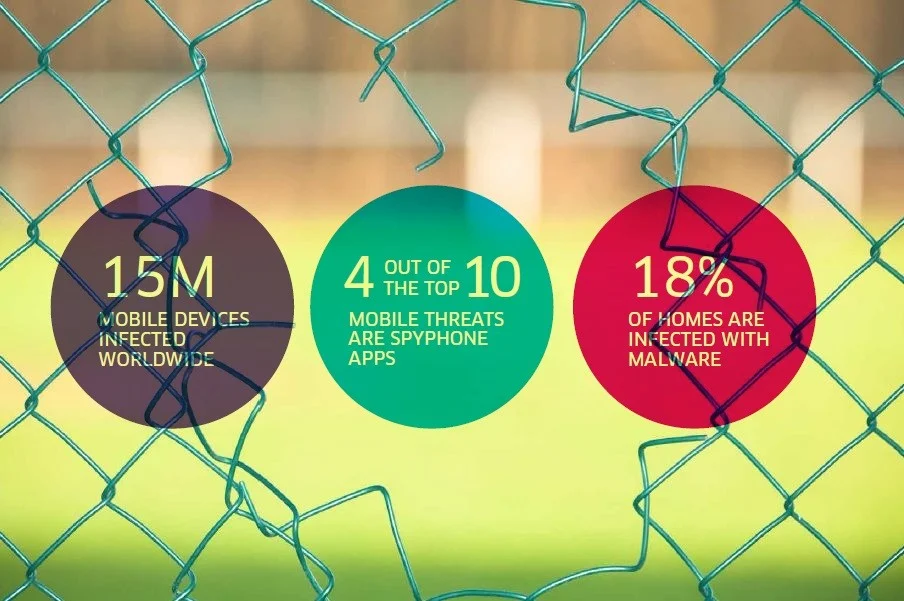
This post first appeared on Exploring Information Security.
I can't remember if I've already shared this video before, but it's worth sharing again.
This is a documentary on DEFCON, a security conference hackers and security professionals so loving refer to as, "Hacker Summer Camp." It's almost two hours long, but well worth it.
Fun With Funny Money - Brian Krebs - Krebs on Security
Krebs takes a deep dive into counterfeit money: where it's sold and how to identify it.
Finally, we have a three page article on podcasting
10 years of podcasting: Code, comedy, and patent lawsuits - Cyrus Farivar - ars technica
This dives into the history of podcast, where it started, what it's become and some of the challenges podcasters are facing through the legal and patent systems.
This post first appeared on Exploring Information Security.

I'm at a bit of a crossroads with the Exploring Information Security podcast. I am trying to decide if it's a project I want to continue doing. I currently have seven episodes on the books and I have ideas for other episodes, but something just doesn't feel right with the episodes.
I'm not sure what it is about the podcast, but I am struggling with getting excited about the podcast. I absolutely love all the interviews I've done and even the preparation I put into each episode leading up to the recording, but after that interview it feels more like a chore to produce the episode. I also feel like I'm not asking the right questions to really dig into a topic. I've thought about tweaking it, but I'm not really sure what to tweak. I haven't put the podcast on iTunes yet because of that reason. I don't want to put something up for a handful of episodes and then have it die off.
So what I am looking for with this post is to garner some feedback of the podcast: Do you like it? do you hate it? Would it be better with some tweaks? or any other nice/awful thing you can say about it. I want to hear it. If you have no idea what I'm talking about click the link below:
Exploring Information Security Podcast
Listen to a few episodes and let me know what you think. You can leave feedback in the comment section below, contact me on Twitter (@TimothyDeBlock) or contact me via email (timothy.deblock[at]gmail[dot]com).
This post first appeared on Exploring Information Security.
Simply awesome!
What a great BSides event. Not only was it a short drive for me, but the event itself was top notch, all at the fantastic price of free. I can't gush enough about how great of an event this was. Excellent talks, great location and wonderful people. I volunteered for the event and you can read my experience from that as well as a rant about how awesome volunteering is by clicking <------- this link.
I love that this BSides decided to go with a blue team and a red team track. It helped define some of the talks that might not have been apparent in the title or in the abstract. Full disclosure: I'm a blue team guy and thus spent most of the day in the blue track. I hear there were some fantastic red team talks like Tim Tomes', The Adobe Guide to Keyless Decryption:
But there were also some fantastic blue team talks like Tim Crothers', Techniques for Fast Windows Investigations:
Or Chris Campbell's, Using Microsoft's Incident Response Language:
What I loved in particular about this talk was the Chris spent the majority of his talk going over actual code and techniques, which is not something I see a lot of talks doing. If you're interested in PowerShell, have it up while you're watching this talk.
There's also Chris Sanders' talk Defeating Cognitive Bias and Developing Analytic Technique which kicked off the blue team track:
Finally, Mark Baggett closed out BSides Augusta with his awesome talk Crazy Sexy Hacking:
These talks were the ones that impacted me the most. Everyone is going to get something different out of each talk. I would recommend you check out all the talks at the BSides Augusta YouTube channel. I don't think you'll be disappointed.
One other awesome thing happened at BSides Augusta in that the local media showed up announced and took footage of the event as well as conducted interviews with some of the organizers of the event. This is not just a good thing for BSides Augusta, but the infosec community as a whole.
We must present ourselves to the world as professionals and BSides Augusta did that very well. I look forward to more BSides, especially at Augusta.
This post first appeared on Exploring Information Security.
