
Trends 2015 presented by IT-ology wrap-up

Trends 2015 presented by IT-ology was today and I am exhausted.

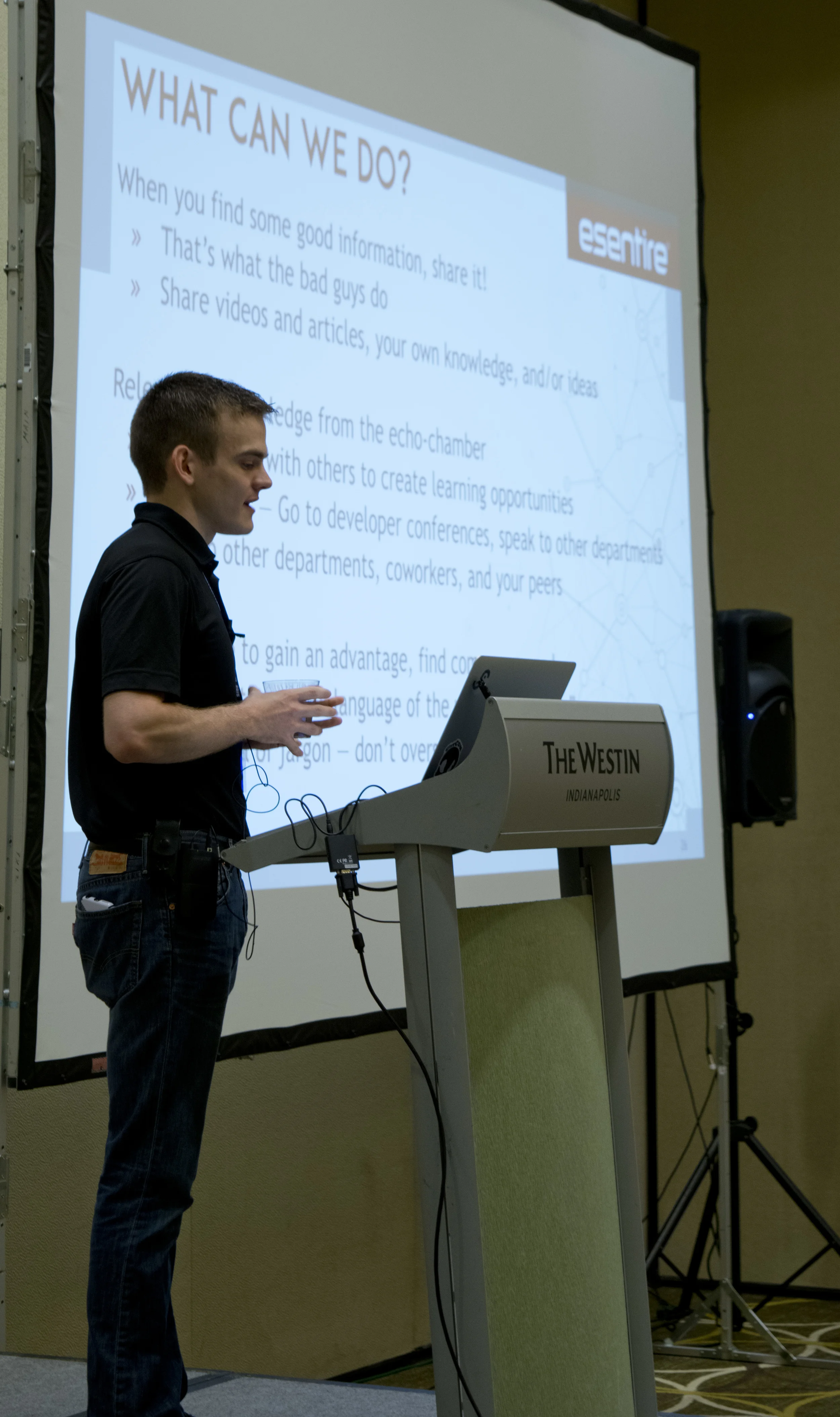
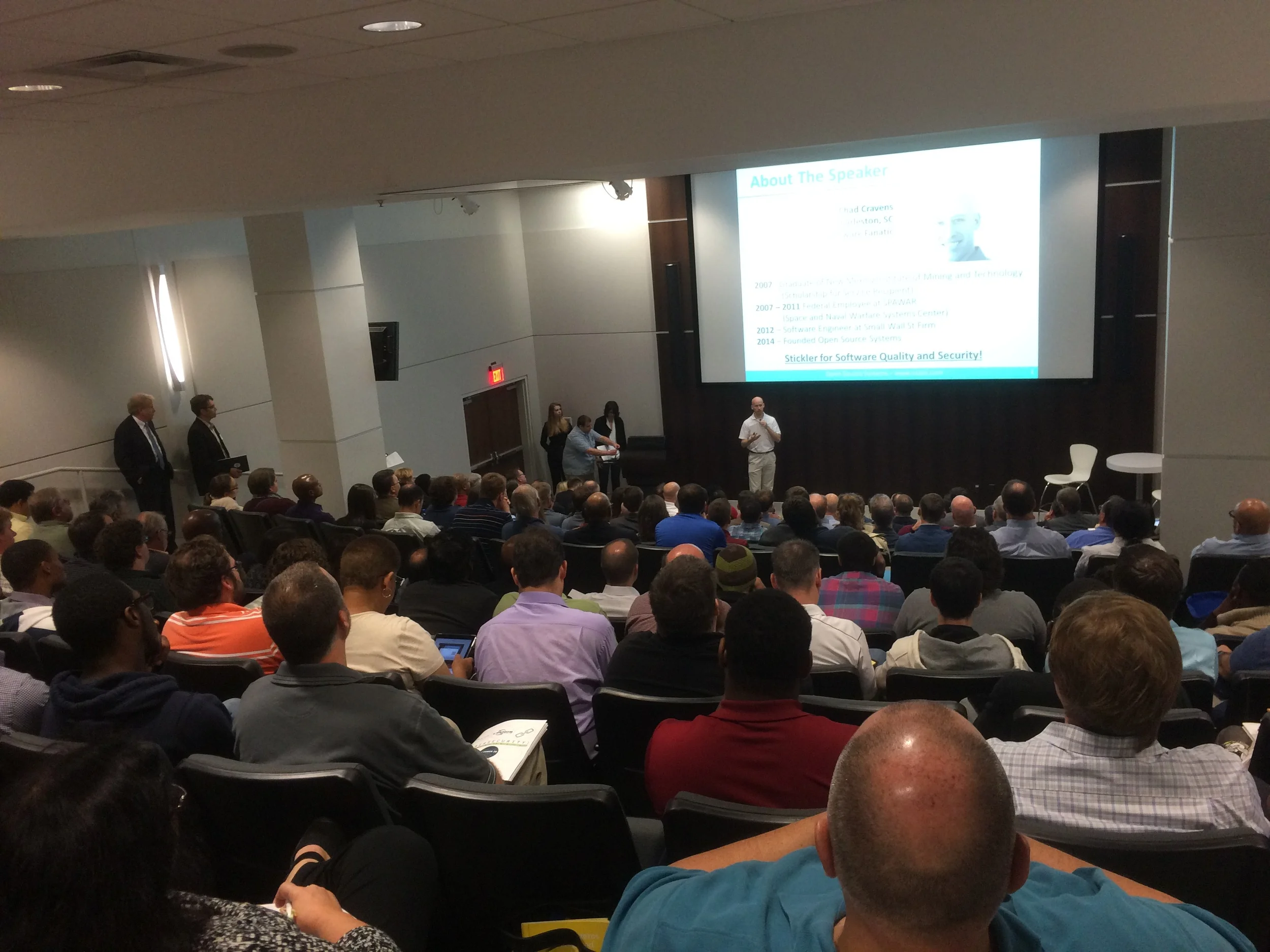
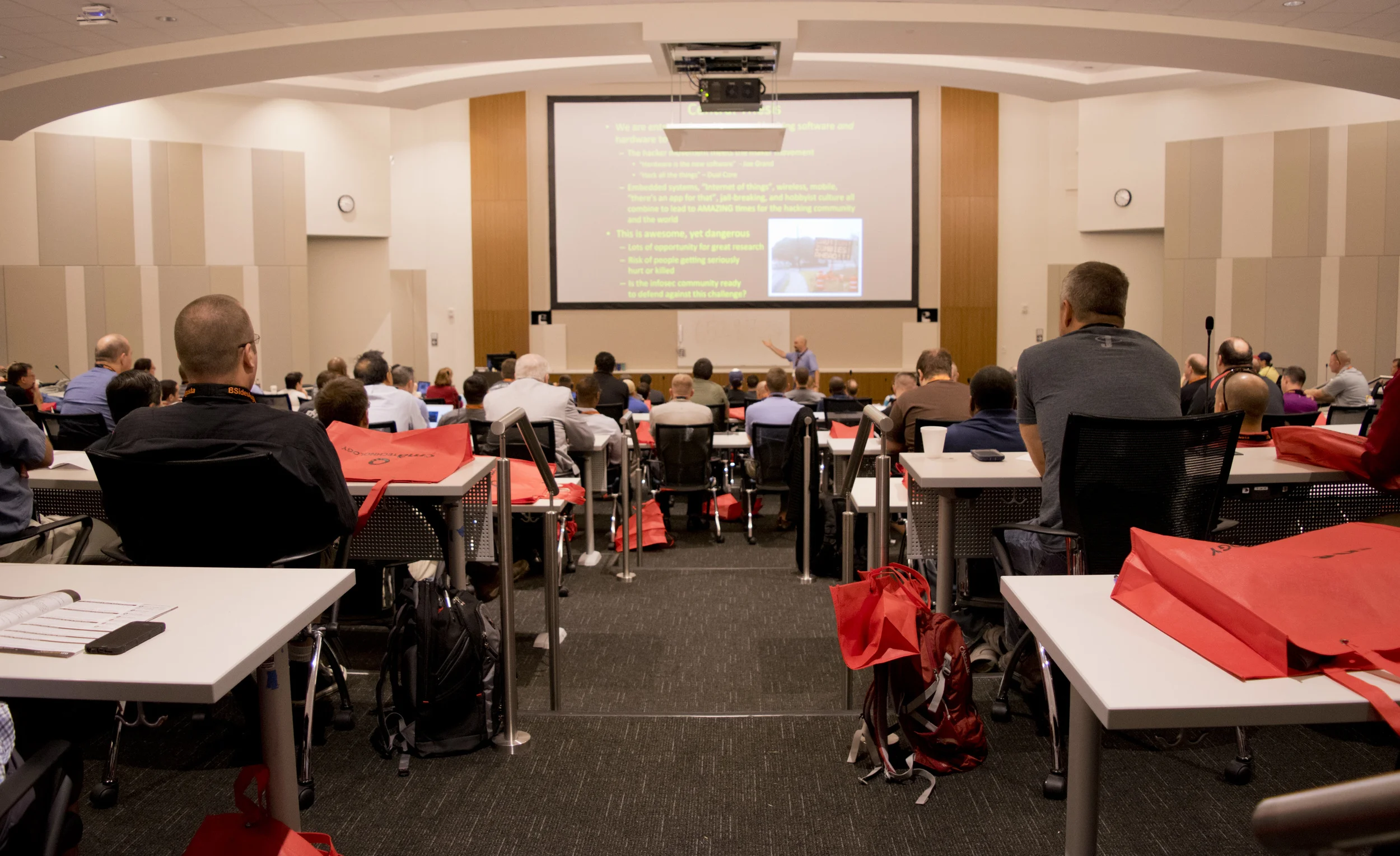
Every year in the fall IT-ology selects a technology topic to hold a conference on. This year was security, so naturally ColaSec was involved in providing speakers, volunteers, and marketing for the conference. Four keynote speakers filled the morning track and 12 speakers filled the afternoon tracks, which were split into technologist, civilian, and business. I presented a talk titled, "Low cost tools for security challenges" in the technologist track.

For those coming to my site who were in that talk, here are my slides and here are my videos (from previous conferences) of the talk. I got some good feedback from in regards to the talk, which was very much appreciated.

Trends 2015 was the last time I intended to give this particular talk. The recordings are out, my slides are out there, and I'd like to move onto some fresh content. What that is, I don't know yet, but I have some ideas. Before I move onto some fresh content, I want to compliment the video and slides of my talk with some blog posts that go a little more in-depth with the tools I presented. Over the next several weeks I intend to have a post a week, with step-by-step instructions on how to use each of the tools in my talk.

Thank you to everyone that made it to my talk and any feedback is still welcome.

This post first appeared on Exploring Information Security.

More resources for IT certifications

The latest Exploring Information Security podcast episode, "What certifications are available for infosec professionals?" released yesterday and I've already started getting some great feedback from the episode.

Tyler Neeriemer on Twitter shared with me a couple links that had certificate roadmaps in them. I really liked this one from CompTIA. The roadmap includes non-CompTIA certs and is laid out intuitively. There's also this article from 2012 by SecureState.

Feedback for the podcast and any helpful links that contribute to an episode are always welcome.

This post first appeared on Exploring Information Security.
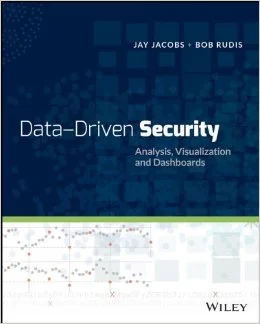
Data Driven Security - all about the analytics

I've been remiss in my blogging duties. I've had some changes in my life recently, but I'd like to get back to posting on a regular basis and there's not real a good reason why I should be able to do that. Allow me to rectify my absentmindedness by talking about the book Data-Driven Security by Jay Jacobs and Bob Rudis.

This was a wonderful book to read as an information security professional. As information security matures (and the world in general) metrics and analytics are going to become a bigger part of the field. We see sabermetrics taking over baseball and other sports for the simple fact that it helps organizations gain a deeper understanding of what the have, which leads to making better decisions. Those same strategies can help many professional fields, including information security.

Each chapter of the book covers a different scenario in which data is analyzed to answer an infosec related question. It also discusses the art of visualization and how to make communicating numbers more useful to people (*cough*executives*cough*). The book exposes the reader to the wonderful world of Python and R studio, both of which are used to analyze and make sense of the data, without requiring too much previous knowledge. Each chapter walks the reader through exercises utilizing pre-built Python scrips in R Studio, just enough to wet the petite.

What I really enjoyed about the book was that it was easy to read. It wasn't bogged down with numbers or big words. Of course, I'm not exactly a newb to reading about statistical analysis. Still, I think people with some interest in data-driven security will find the book a fairly easy read. It's a great starting point for those wanting to explore a discipline in security that is likely to become more and more relevant as security and data matures.

This post first appeared on Exploring Information Security.
The return of the Exploring Information Security podcast

A year ago, I started an information security podcast that explores different topics and disciplines within the field. I stopped producing the podcast because I had too many things going on at the time and my final year of school was about to start. I was overwhelmed and that was an easy project to stop doing. A year later and I've found myself with more time and a desire to continue the project I started a year ago.

This week I have two interviews lined up with more expected in the coming weeks. My plan is to launch in early August. I will be putting the first three episodes I did last year up on iTunes and then begin releasing the episodes weekly. All seven episodes I did last year can be found at http://www.timothydeblock.com/eis/. I will continue to release episodes there, as well as on your favorite podcast directory.

This post first appeared on Exploring Information Security.
CircleCityCon gallery is up and bonus GIFs

All the CircleCityCon pictures are now available on Flickr.

Below are some GIFs I made from the pictures I took.

DJ Rance giving CircleCityCon attendees something to bounce to.

DJRevRance.gif

Who's behind the mask?

Here's the ladies of CircleCityCon having some fun during their "photo shoot."

This post first appeared on Exploring Information Security.
Heading to CircleCityCon

Early Thursday morning I will depart South Carolina and head North to Indianapolis, Indiana, for the three day security conference called Circle City Con. The conference is a three day event with training, speakers, and nightly entertainment that begins June 12, 2015, and ends June 14, 2015.
I am signed on as the photographer of the event to document with pictures all the fun things.

I would love to meetup with anyone going that I know, or even don't know. If you see me walking around the con stop me and say, "hi." Also, if anyone lives between South Carolina and Indiana and needs a ride, let me know. We might be able to work something out.

This post first appeared on Exploring Information Security.

Verizon Data Breach Investigation Report impressions

This is the first year I've read the full Verizon Data Breach Investigation Report. It was quite entertaining, but then again I'm into baseball and within baseball I'm into statistics. The report was easy to read, interesting, and informative and here are my impressions of the 70 page-ish report:

Threat Intelligence

Sharing threat intelligence is useful, but the strategy needs to be more, "going to the well" than "drinking from the hose." Think of the NSA's collection of information, which has been found to largely be ineffective at discovering attacks.

Phishing

Communications, legal, and customer service departments were all more likely to open a phishing email. There is no easy solution or magic wand that can make phishing go away. We need to focus on better filtering, developing and executing an ENGAGING and THOROUGH security awareness program, and improve detection and response capabilities.

Vulnerabilities

It's more effective to focus on getting a patch deployment strategy put in place, than trying patching systems as soon as a new patch is in place. Ten CVEs account for almost 97% of exploits observed in 2014. The ten:

  1. CVE-2002-0012 - SNMP

  2. CVE-2002-0013 - SNMP

  3. CVE-1999-0517 - SNMP

  4. CVE-2001-0540 - Memory leak

  5. CVE-2014-3566 - POODLE

  6. CVE-2012-0152 - RDP

  7. CVE-2001-0680 - Directory traversal

  8. CVE-2002-1054 - Directory traversal

  9. CVE-2002-1931 - XSS

  10. CVE-2002-1932 - Log deletion

According to this list, there is still a lot of vulnerabilities from the past that need to be patched. Getting a patching process in place is great for all the new stuff, but don't forget about all the old stuff that came out before the security team was in place.

Mobile

".03% of smartphones per week were getting owned by "high-grade" malicious code."

Android is the worst operating system (everyone saw that one coming) and, "most of the malware is adnoyance-ware and similar resource-wasting infections." This might change in the future, but for now it's not a huge area of concern.

Malware

My favorite line came from this section, "Special snowflakes fall on every backyard," which is in relation to "new" malware getting around anti-virus as being described as "advanced" or "targeted." Not the case according to the report. Malware is being given unique hashes to avoid detection by anti-virus.

Industry profiles

Each organization is unique, which is not earth shattering, but good to understand when looking at internal and external entities.

Impact

There is some supply and demand with data breaches: the higher the amount of records lost; the lower the cost of each record. Keep in mind records only tell half the story when it comes to the impact of a breach. There is fallout, not only within the company but outside it.

Incident classification patterns

96% of data breaches fall into nine basic pattersn:

  1. POS Intrusions - 28.5%

  2. Crimeware - 18.8%

  3. Cyber-Espionage - 18%

  4. Insider Misuse - 10.6%

  5. Web App Attacks - 9.4%

  6. Miscellaneous Errors - 8.1%

  7. Physical Theft/Loss - 3.3%

  8. Payment Card Skimmers - 3.1%

  9. Denial of Service - .1%

These are all from the first half of the report. The other half of the report went into discussing each time of data breach and what we can learn. I highly recommend reading the whole report. Not only is it an easy read, but it gives great insight into the current landscape of breaches


This post first appeared on Exploring Information Security.